Tutorials
Short videos, one thing each. Pick one, watch it, then try it yourself.
Meet Academic Ancestry
Half a minute on what the site does: one name in, a whole academic family out.
Start here
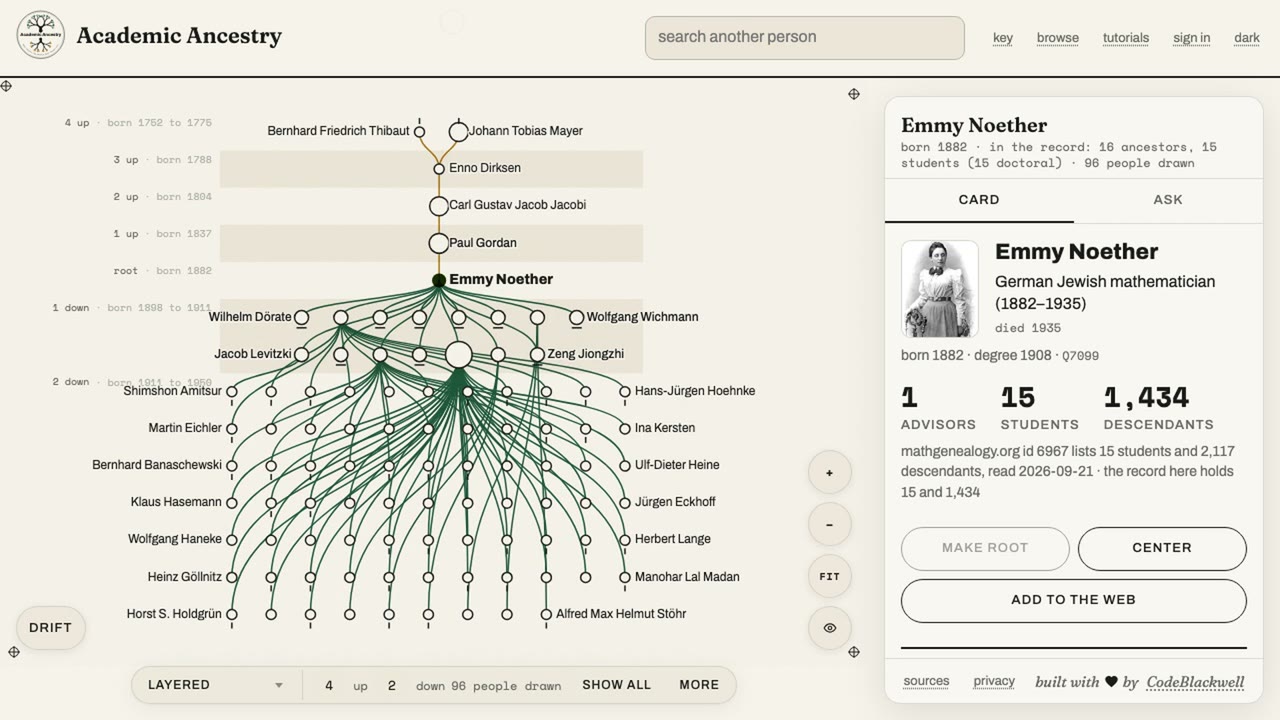
The sheet
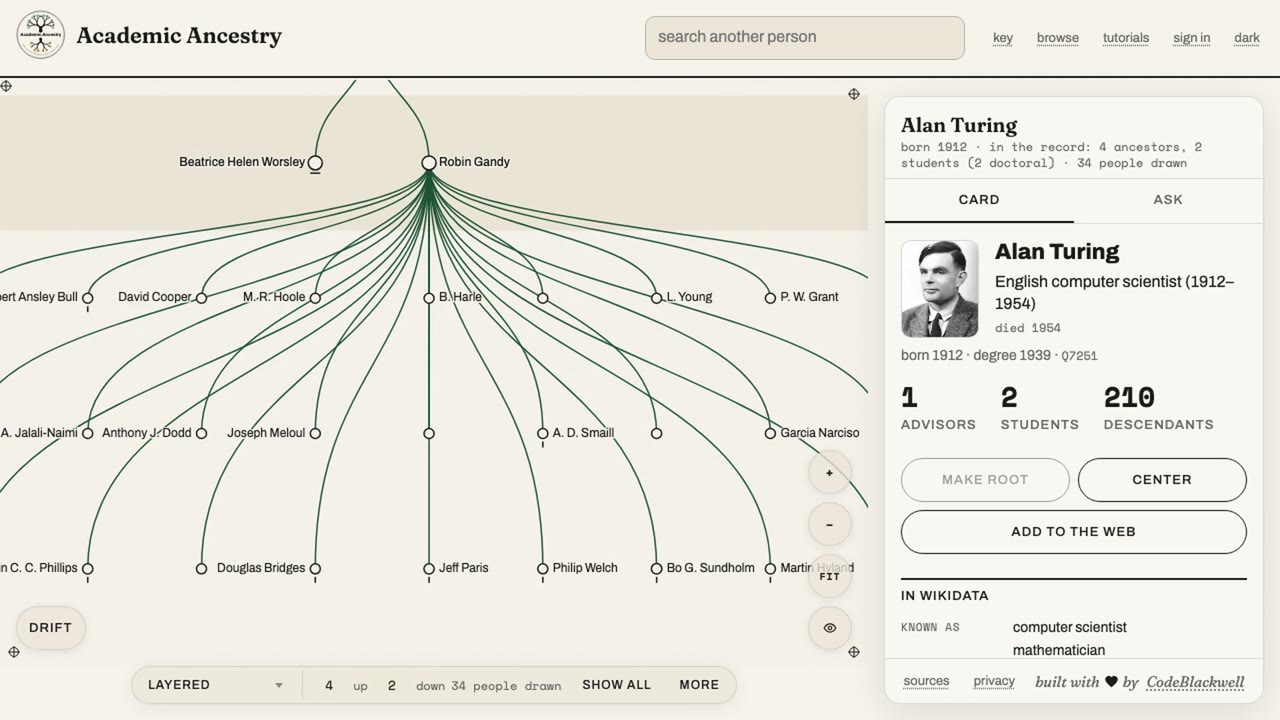 0:32Move aroundDrag the sheet, zoom in for the names a crowded row hides, and fit to bring the whole figure back.
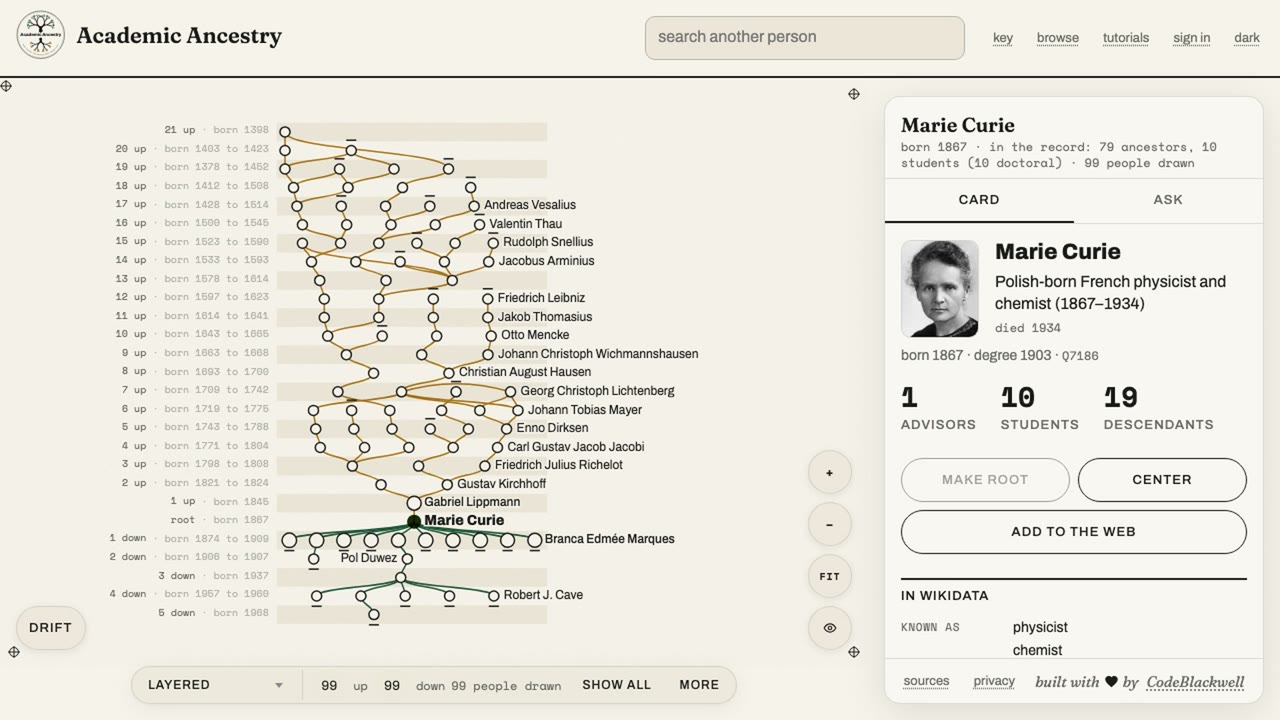 0:53More or fewer generationsSet how many generations a sheet draws, show everything the record holds, and open what a big family folds away.
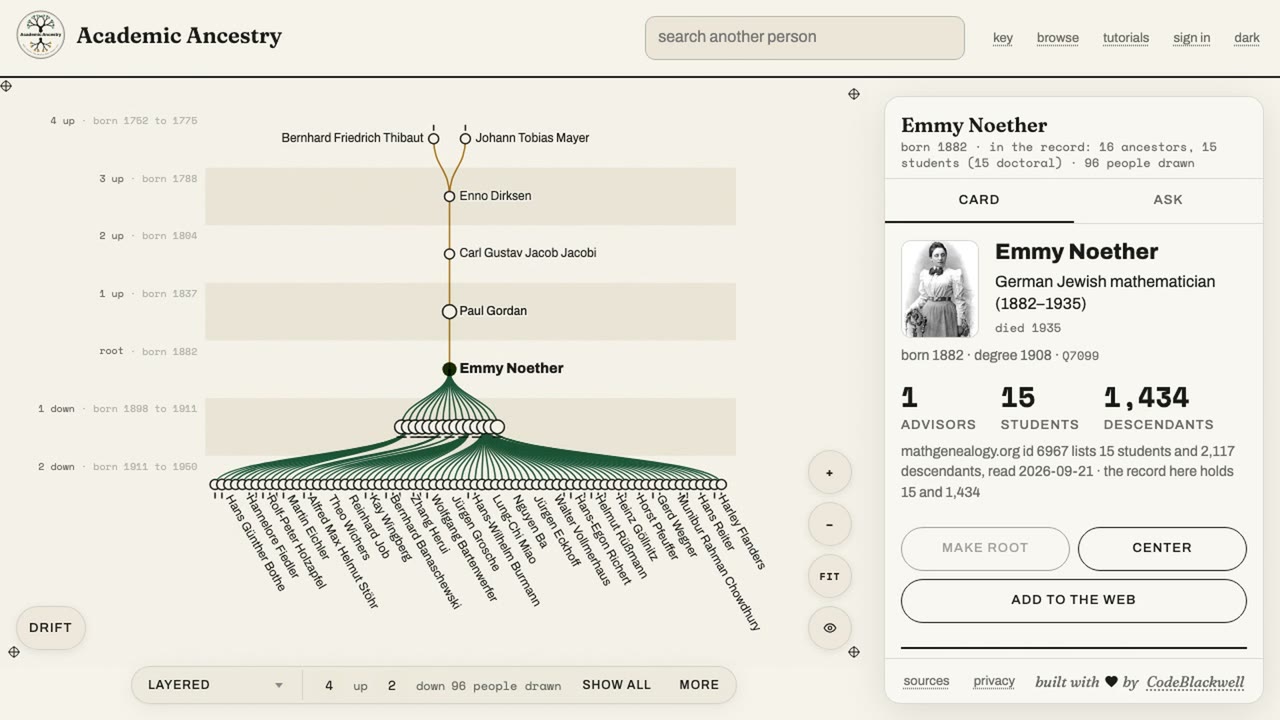 0:45Crowded rowsWhat a sheet does with a row of more than twelve people, and the two boxes that wrap it or slant its names.
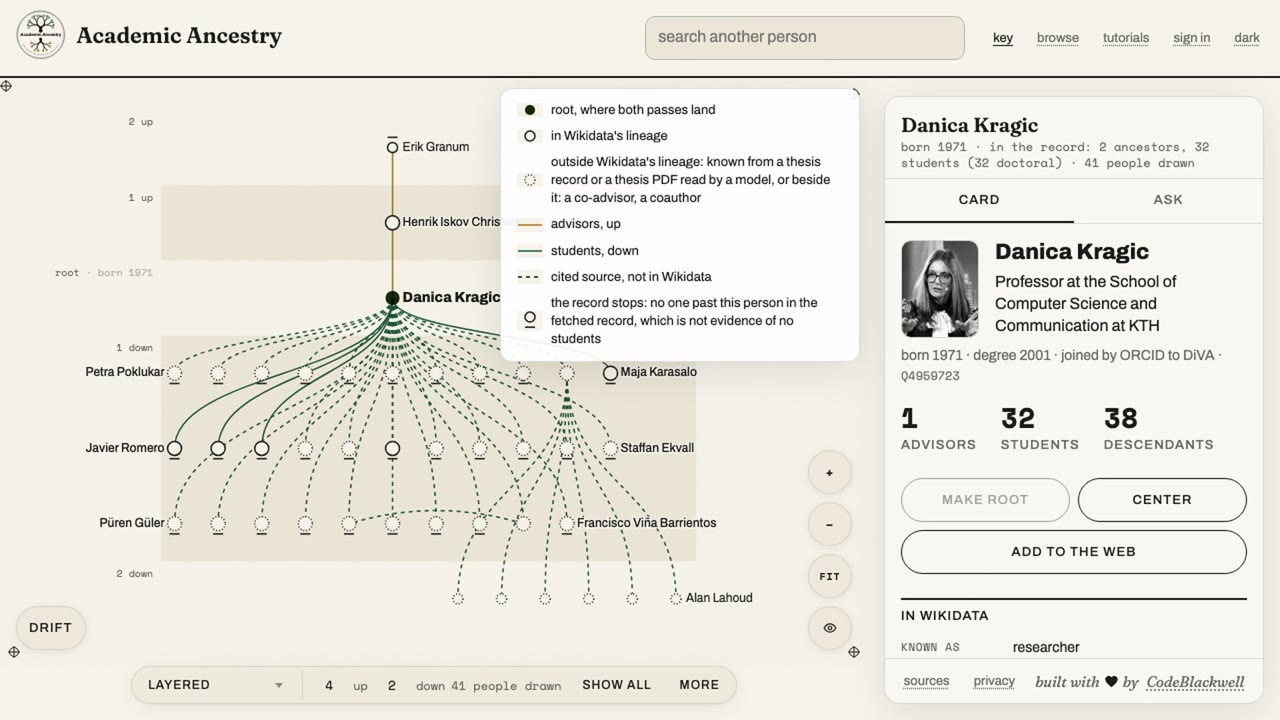 0:45The key and the kinds of lineWhat the colours, dashes, rings and bars on a sheet mean, and how the key lists only what is drawn.
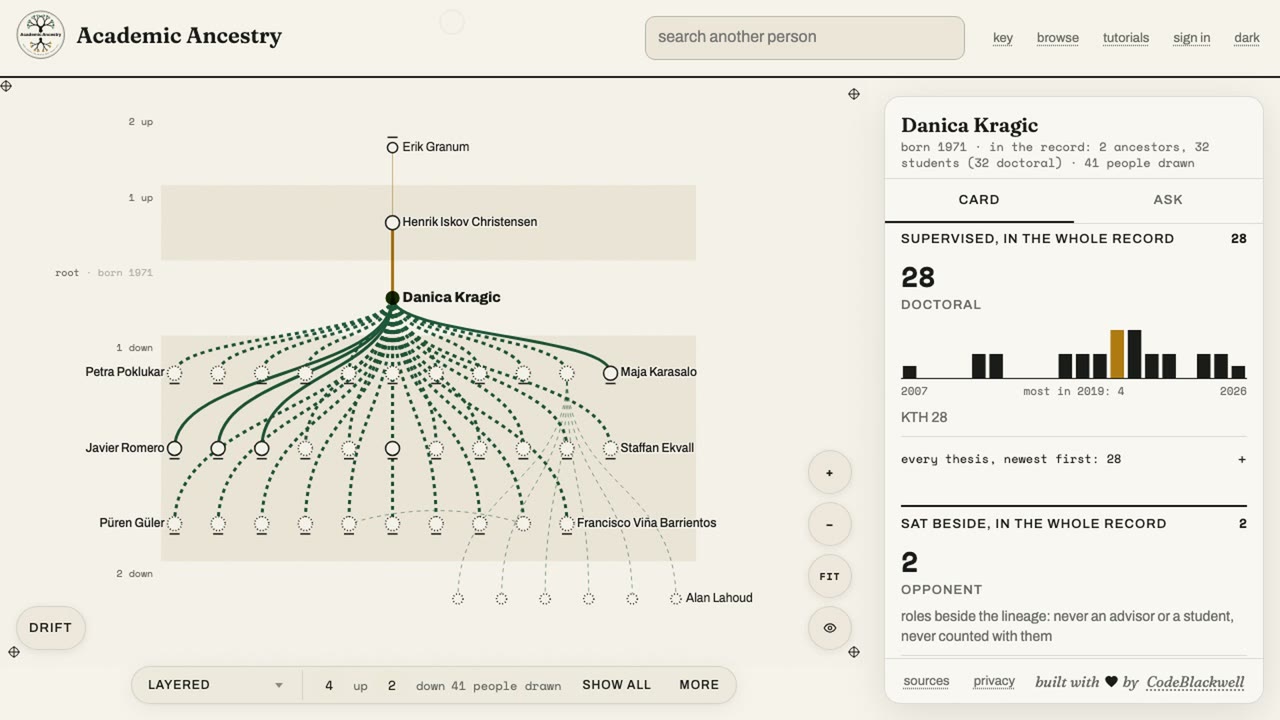
 0:45Committees, teachers and mentorsAdd the examiners a thesis names, and the teachers Wikidata records, beside the family and never counted in it.
Cards
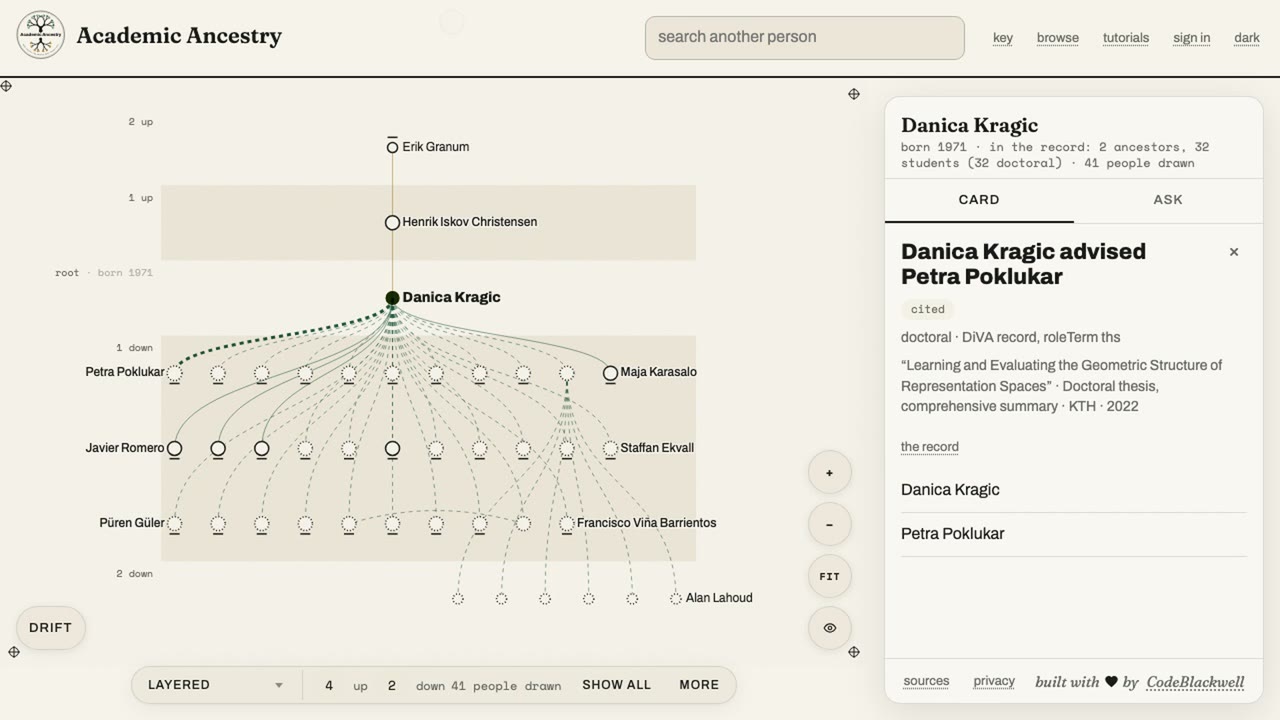
Views
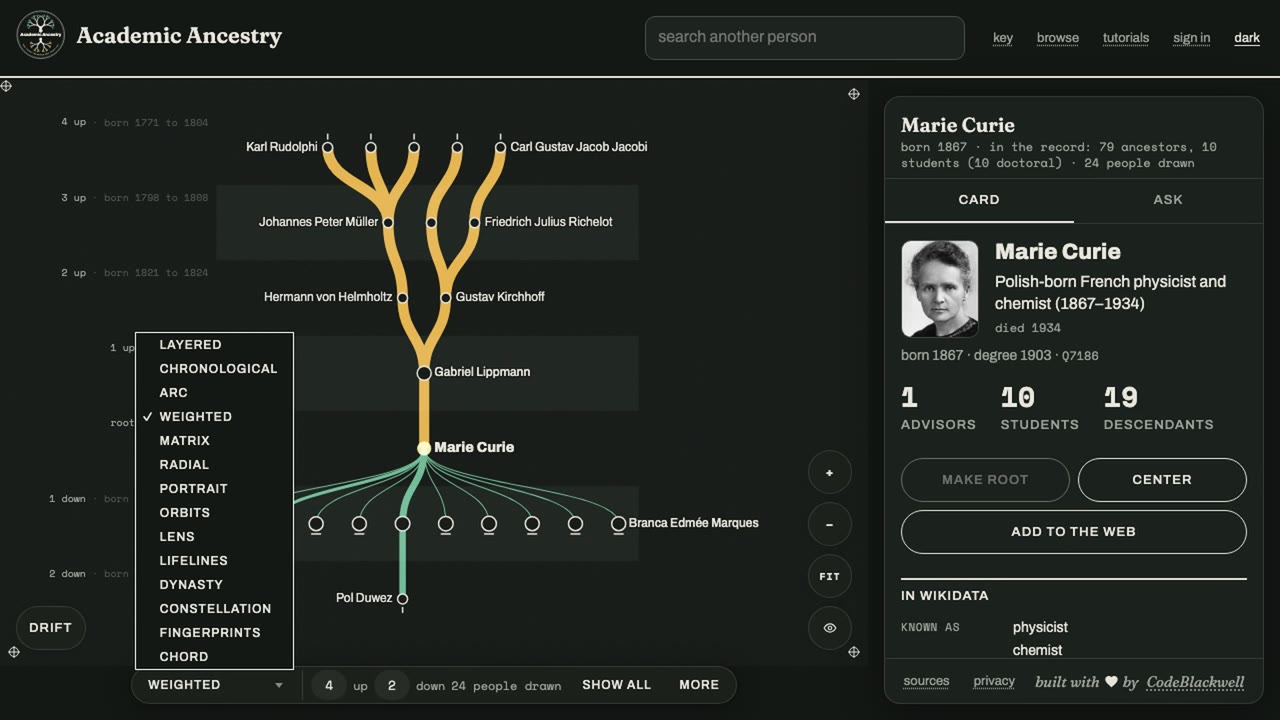 0:45Pick a viewWhere the view picker is, what switching looks like, and how your choice travels with the link.
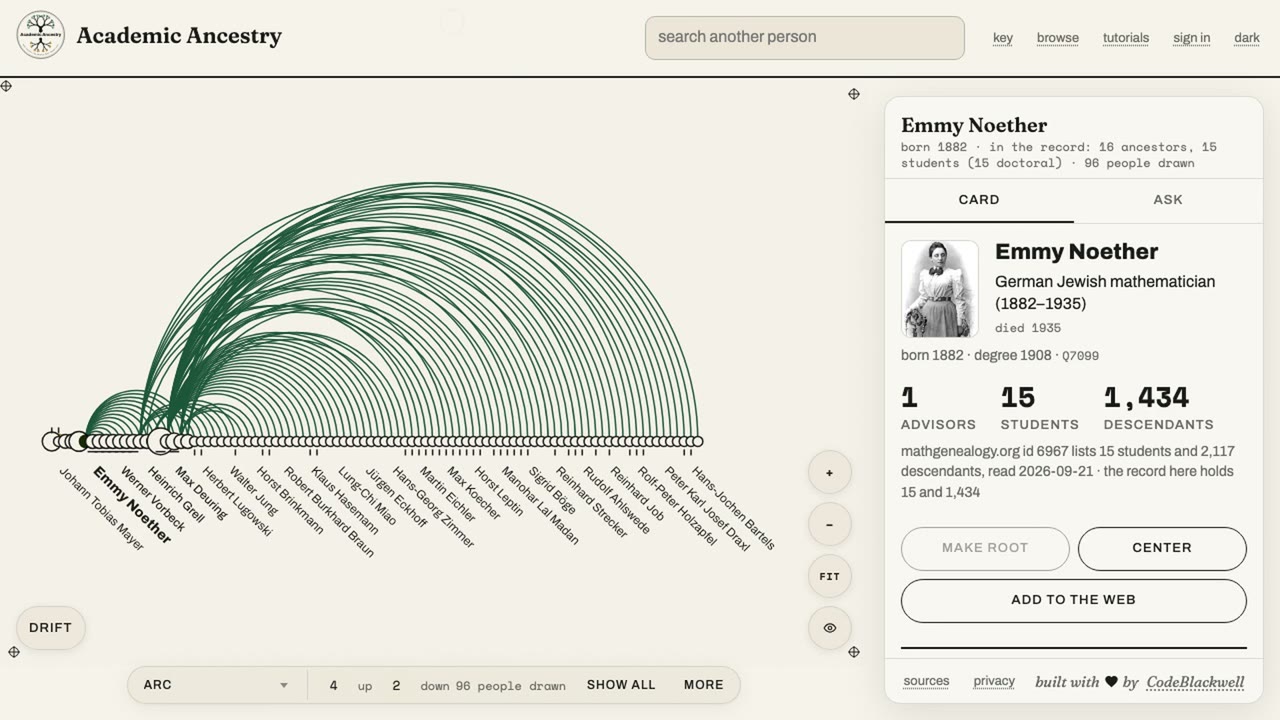
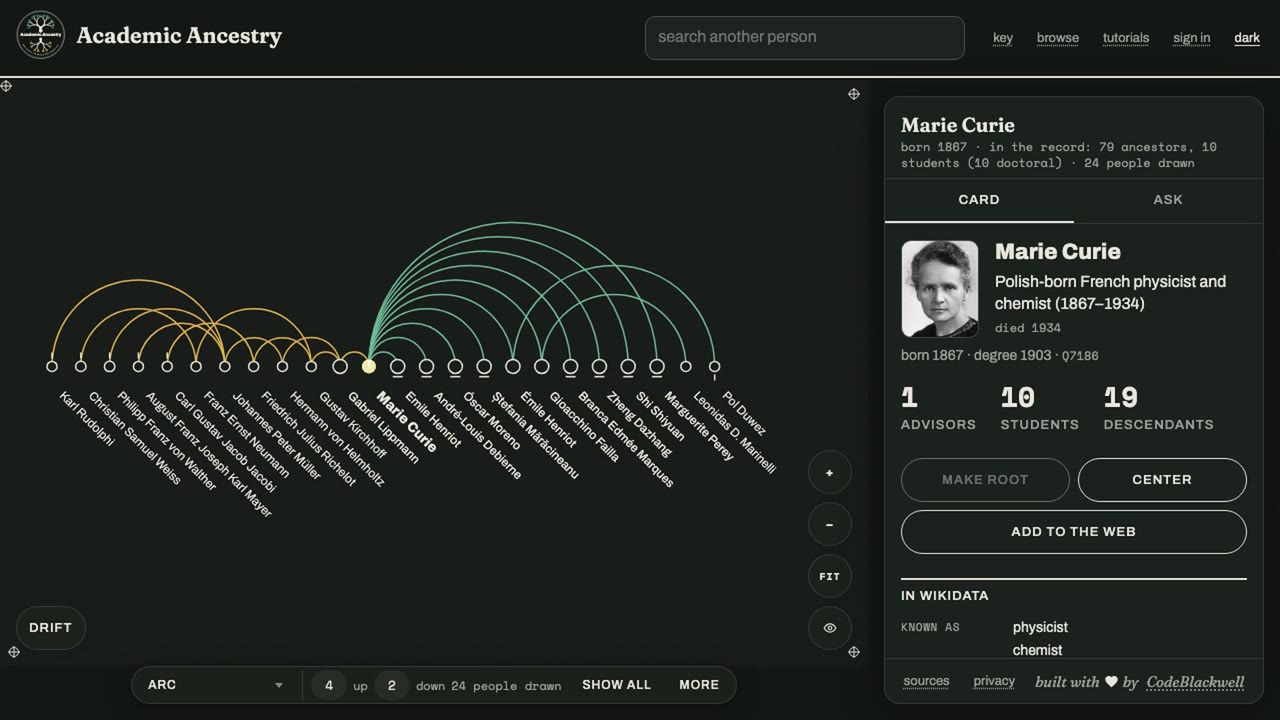 0:42Arc and radialThe whole family on one line, an arc for every advisor and student, then spread out in rings.
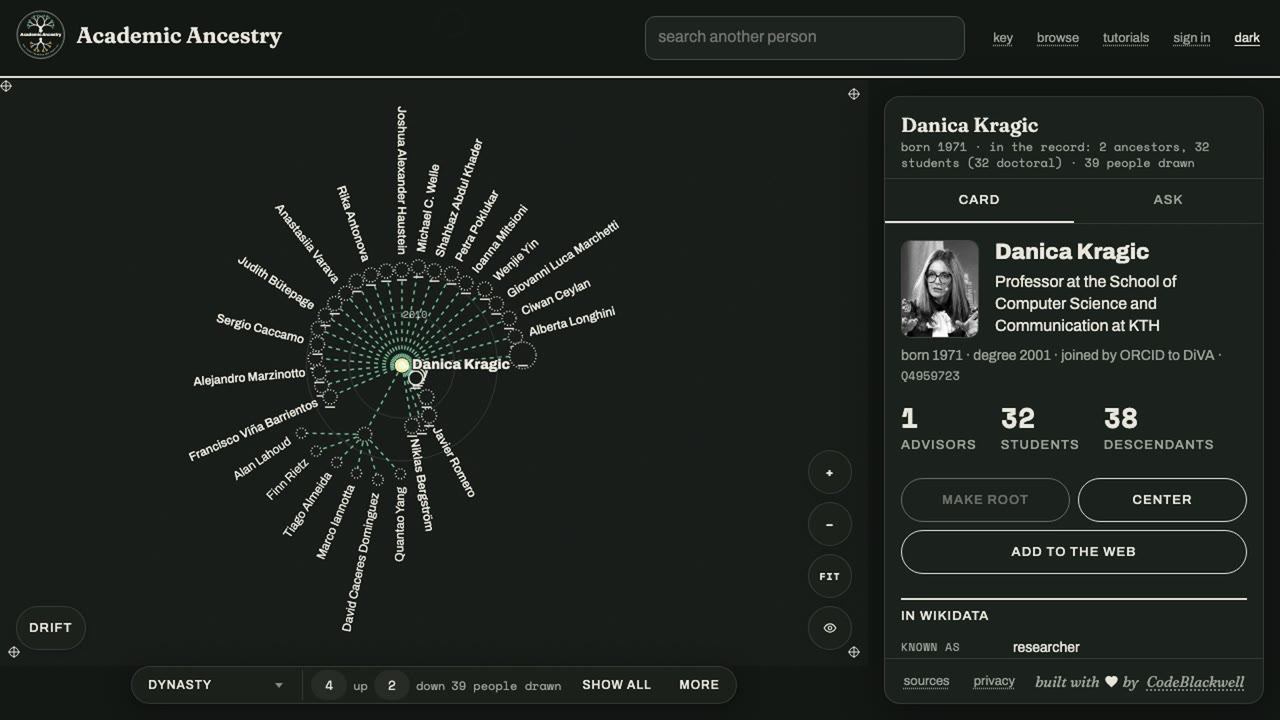 1:03Dynasty, orbits and constellationThree views of the people one person trained: branches by year, a dial each, and a rim with the examiners inside.
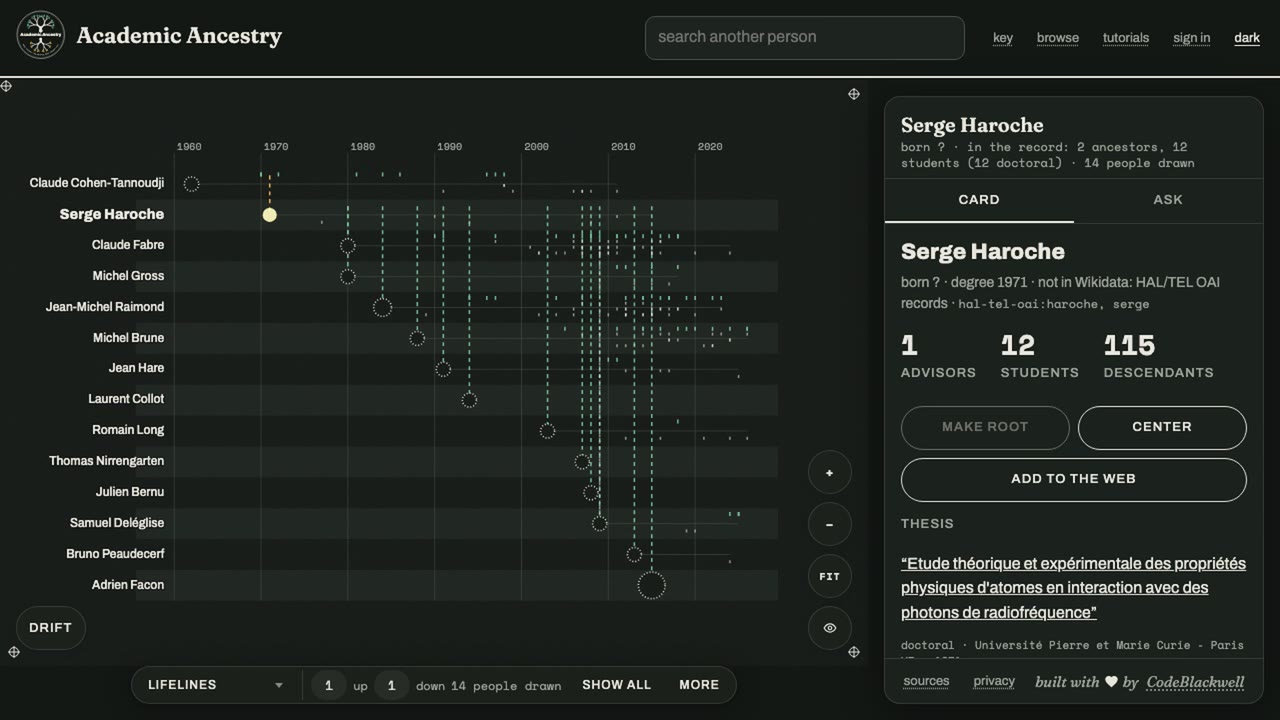 0:47Through timeTwo views that lay a family out by year: the years down the page, or a row for each person.
 0:49One lifeOne person's whole career on a dial, role by role and year by year, and a small glyph for everyone in the family.
Several people
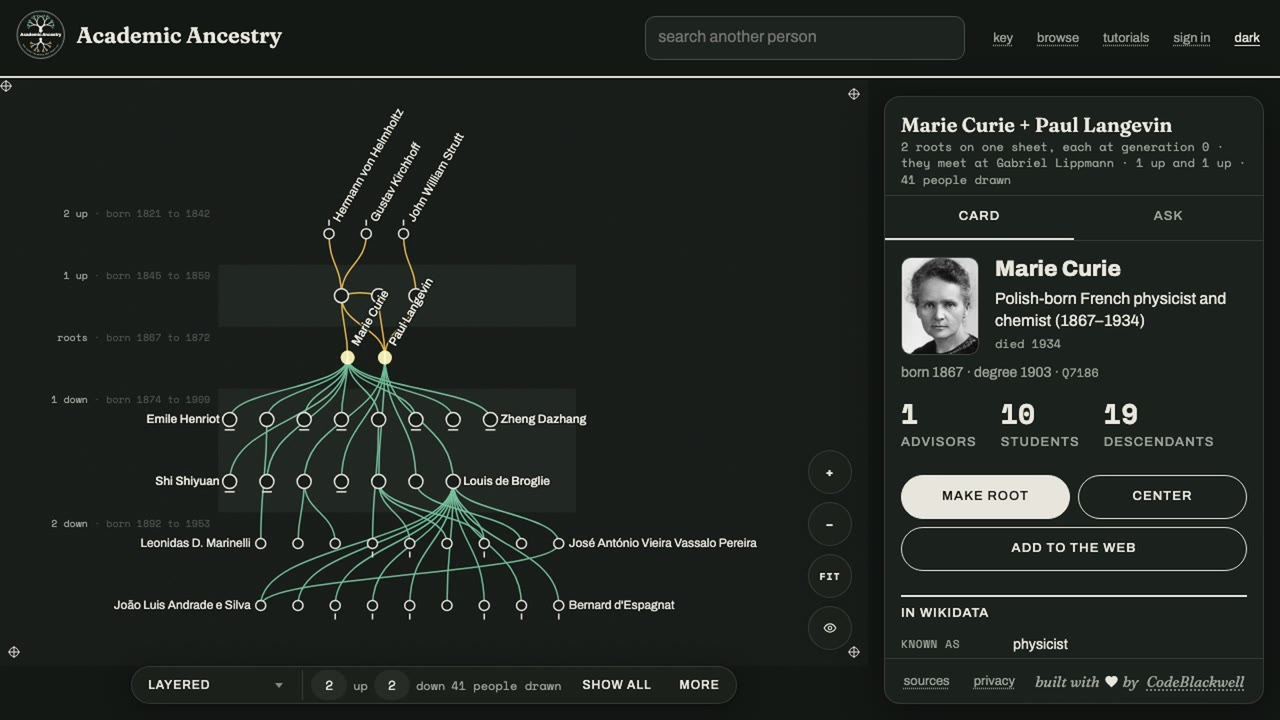 0:51Add a second personPin a second person beside the first, and see both families on one sheet and where they meet.
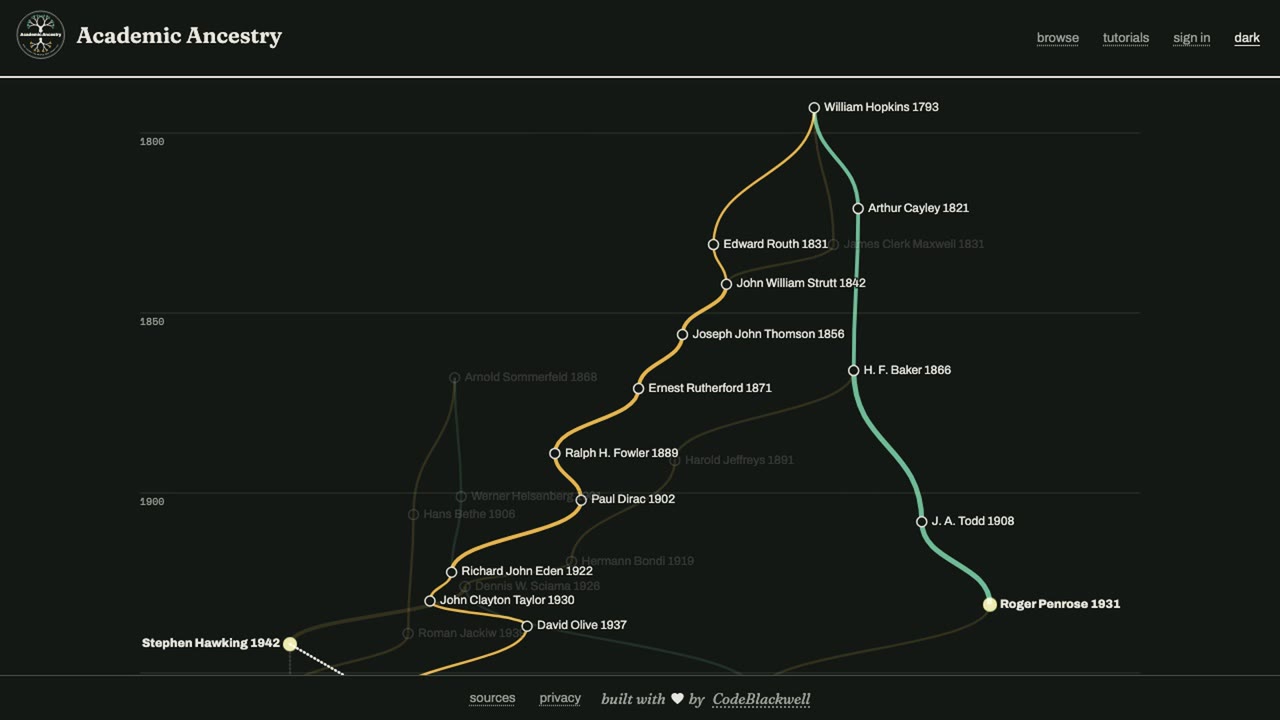 0:54Routes between two peopleEvery way the record ties two people together, through advisors and coauthors, drawn and spelled out.
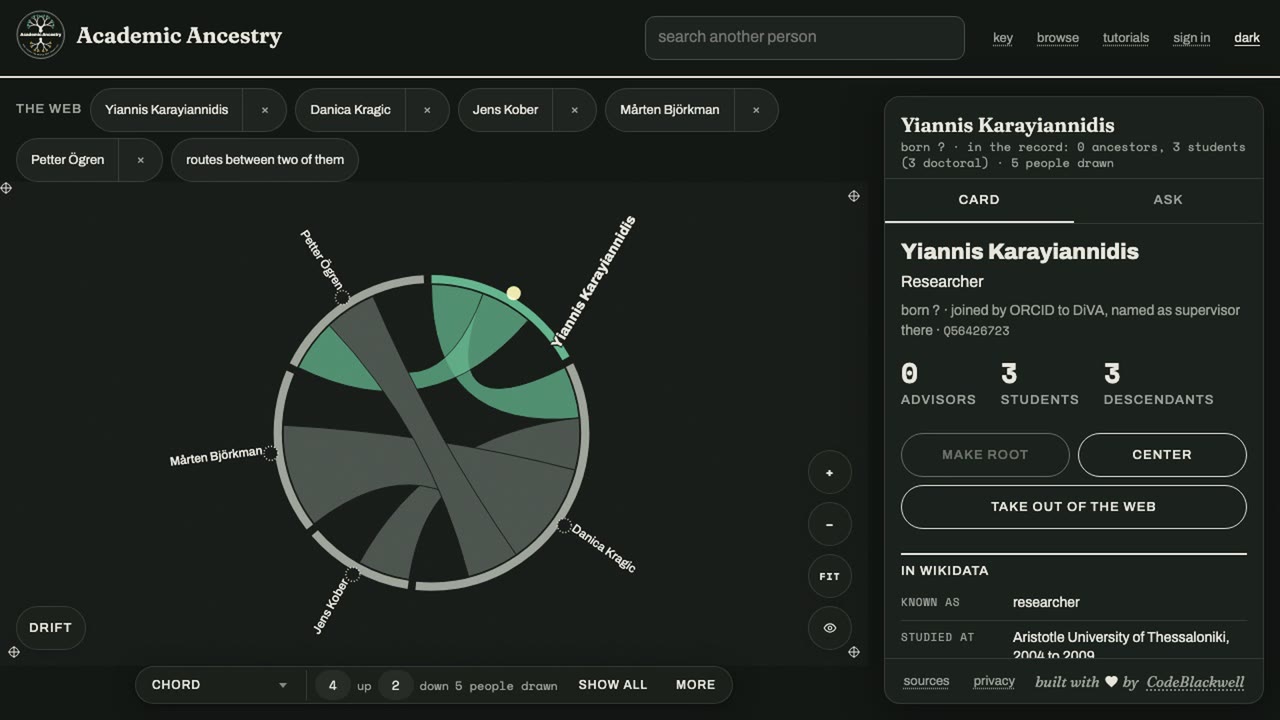 0:56A web of peopleGather up to six people into a web: the people they share on a ring, the theses they sat on together as ribbons.
Papers and terms
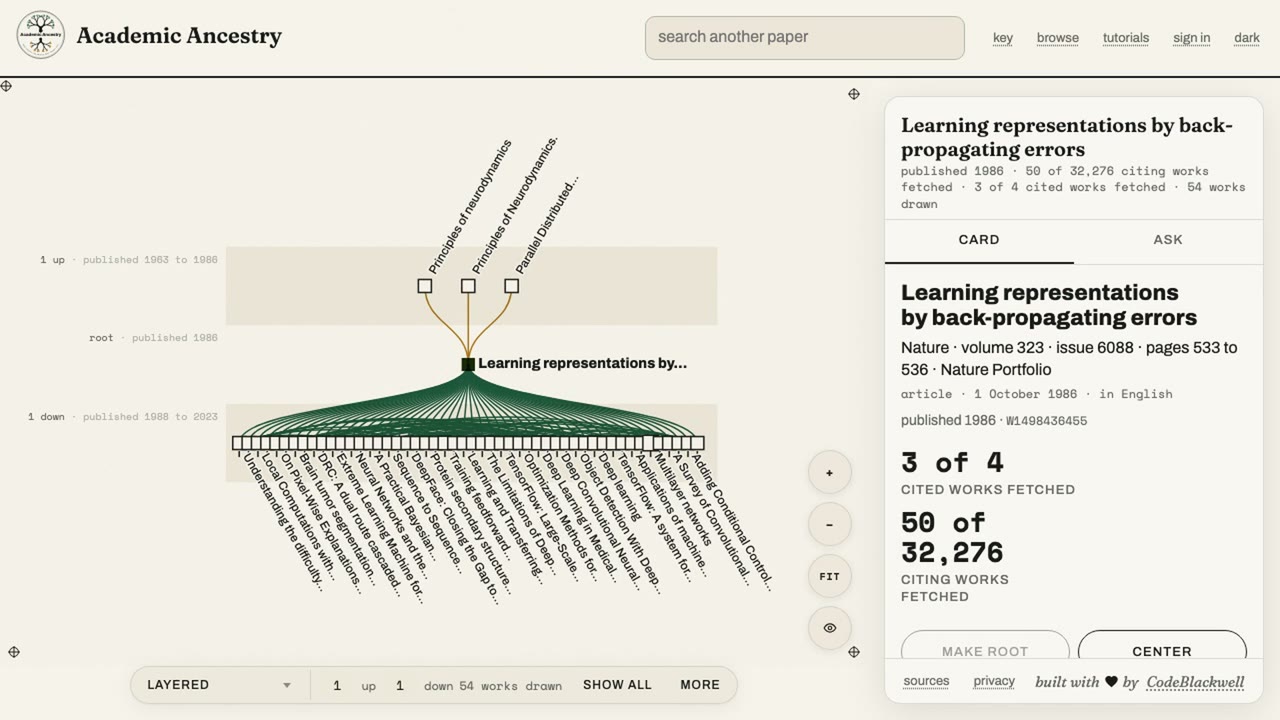 1:04Start from a paperType a paper's title and open it: the works it cites above, the works that cite it below, and its authors on the card.
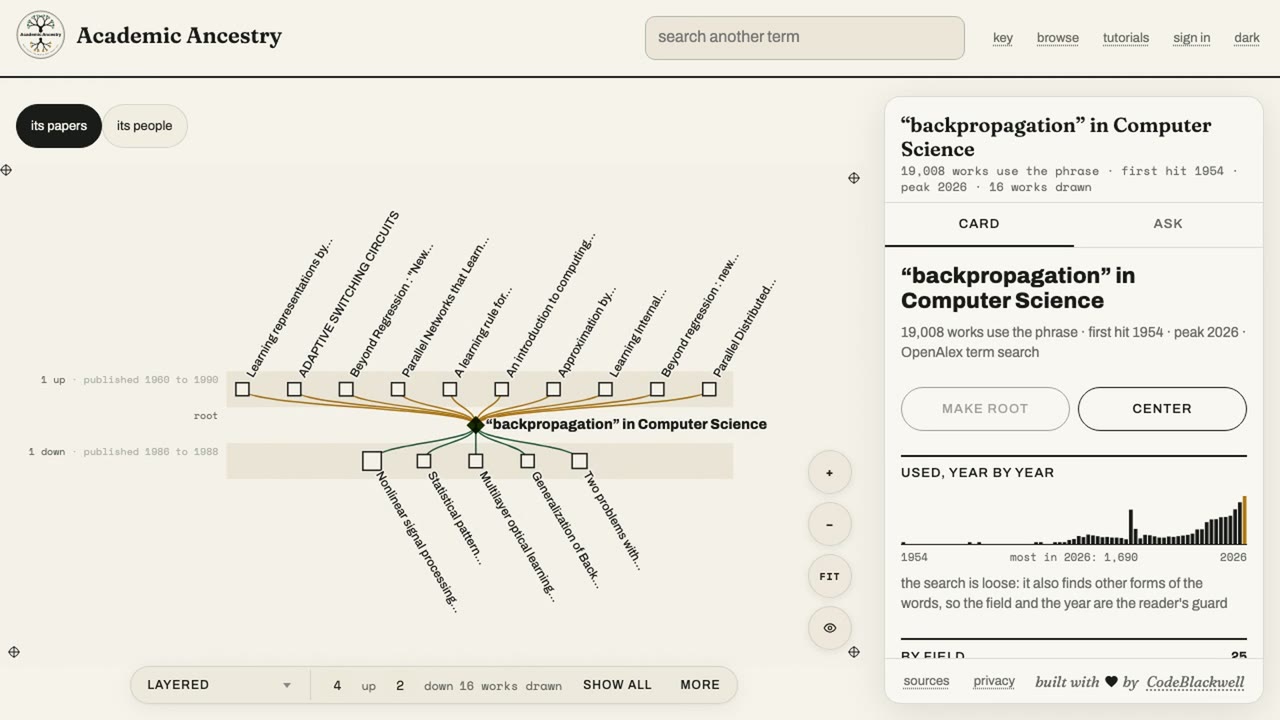 1:02Start from a termType a phrase, pick the field you mean, and see the works the idea grew from.
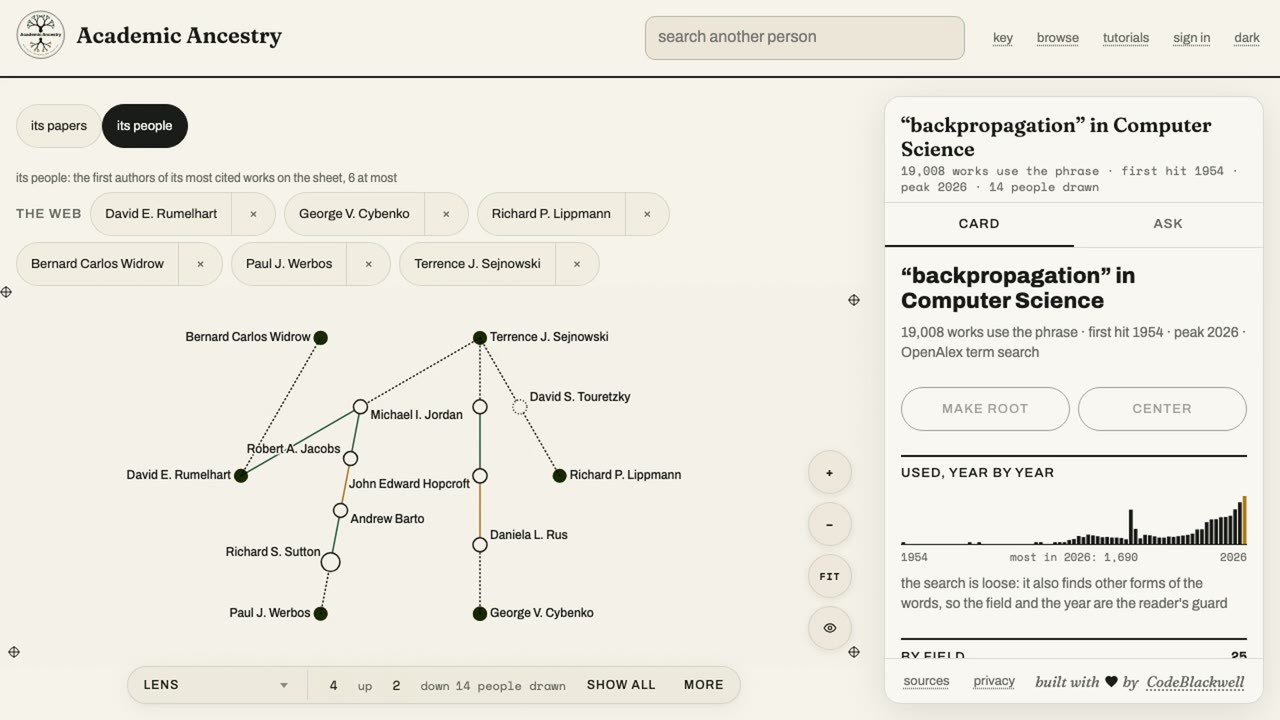 0:45A term's peopleFrom a term to the people behind it, and the advisors and shared papers that tie them together.
Explore
 0:56Browse by place or fieldNo name in mind? Start from a country's repositories, or from a field, and meet the advisors with the most students there.
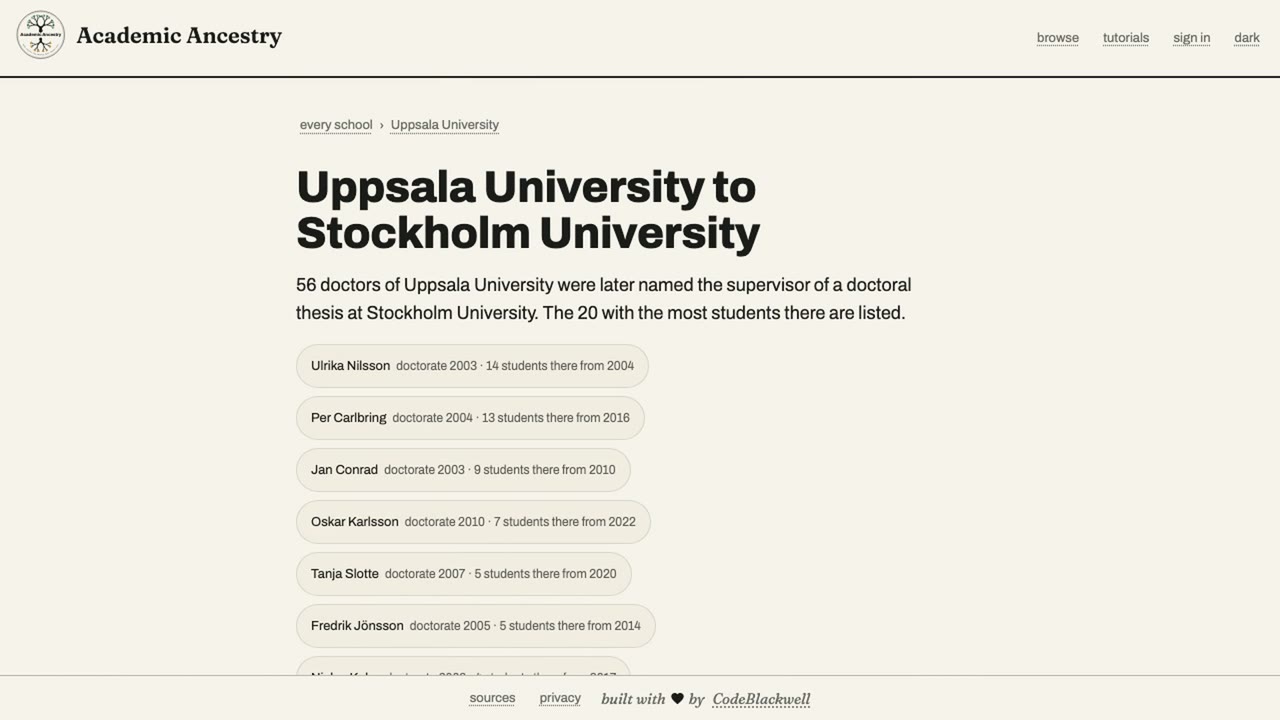 0:42School to schoolFollow a school's doctors to the schools where they went on to supervise.
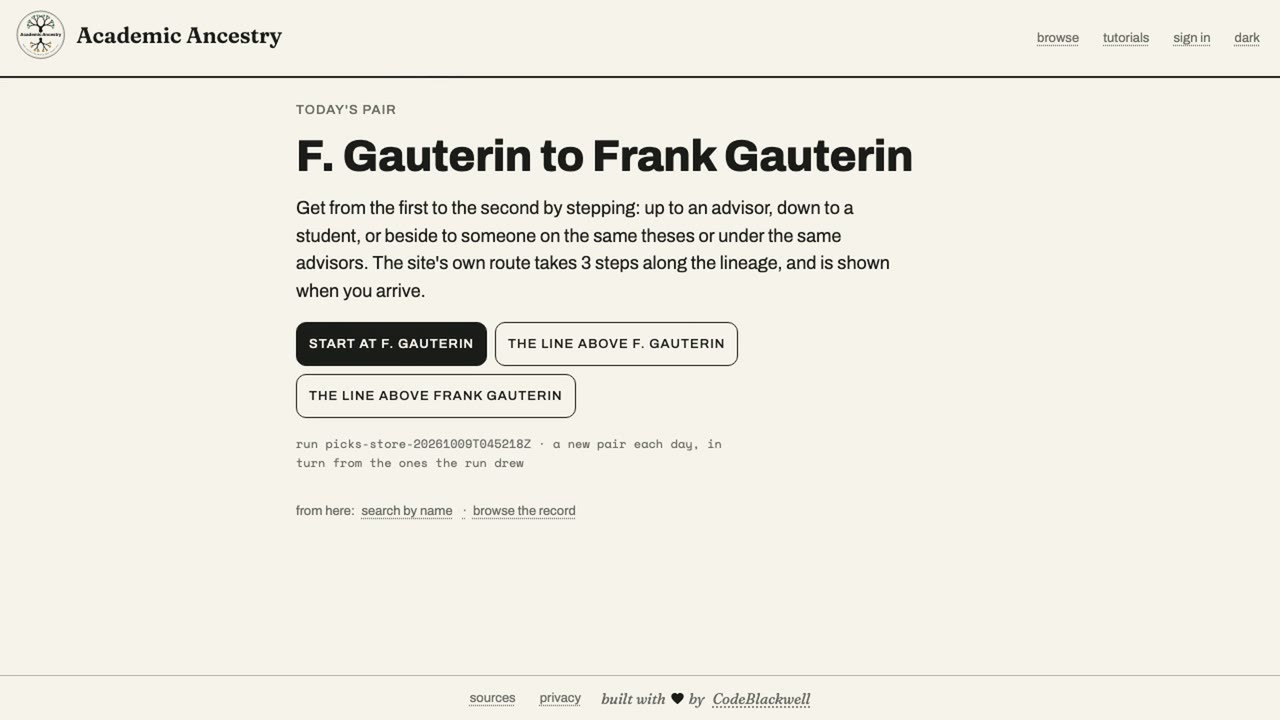 0:52Today's pair and picksA daily puzzle between two advisors, the record's extremes, and an advisor picked at random.
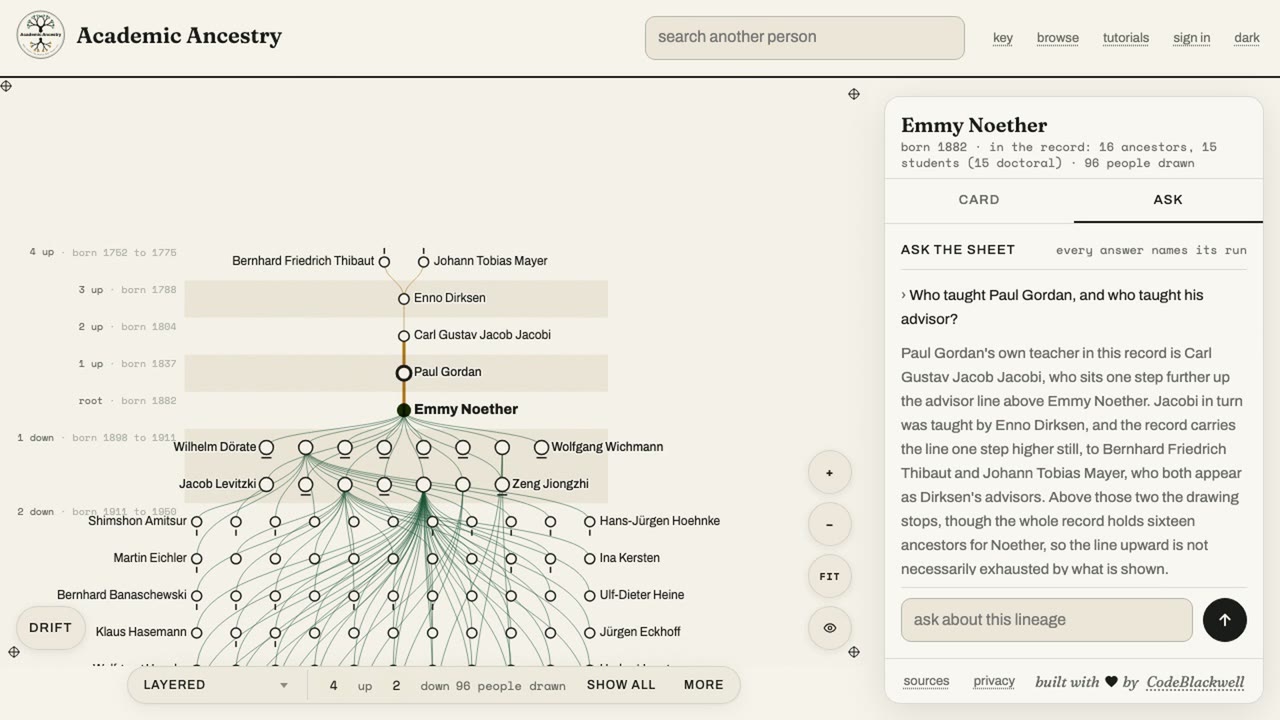 0:49Ask the sheetPut a question to the sheet in plain words, and get an answer that names the people on it.
Keep and share
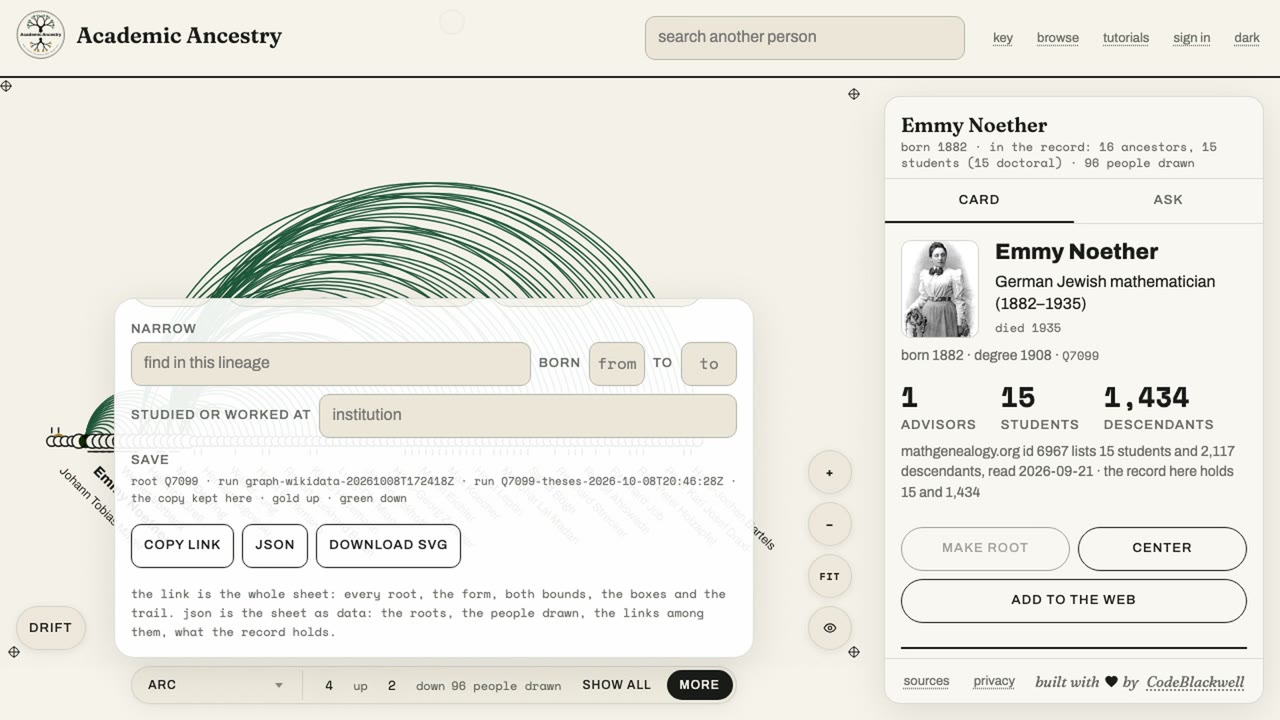 0:58Share and saveCopy a sheet's link to open the very same figure anywhere, save it as a file, or send a person's line.
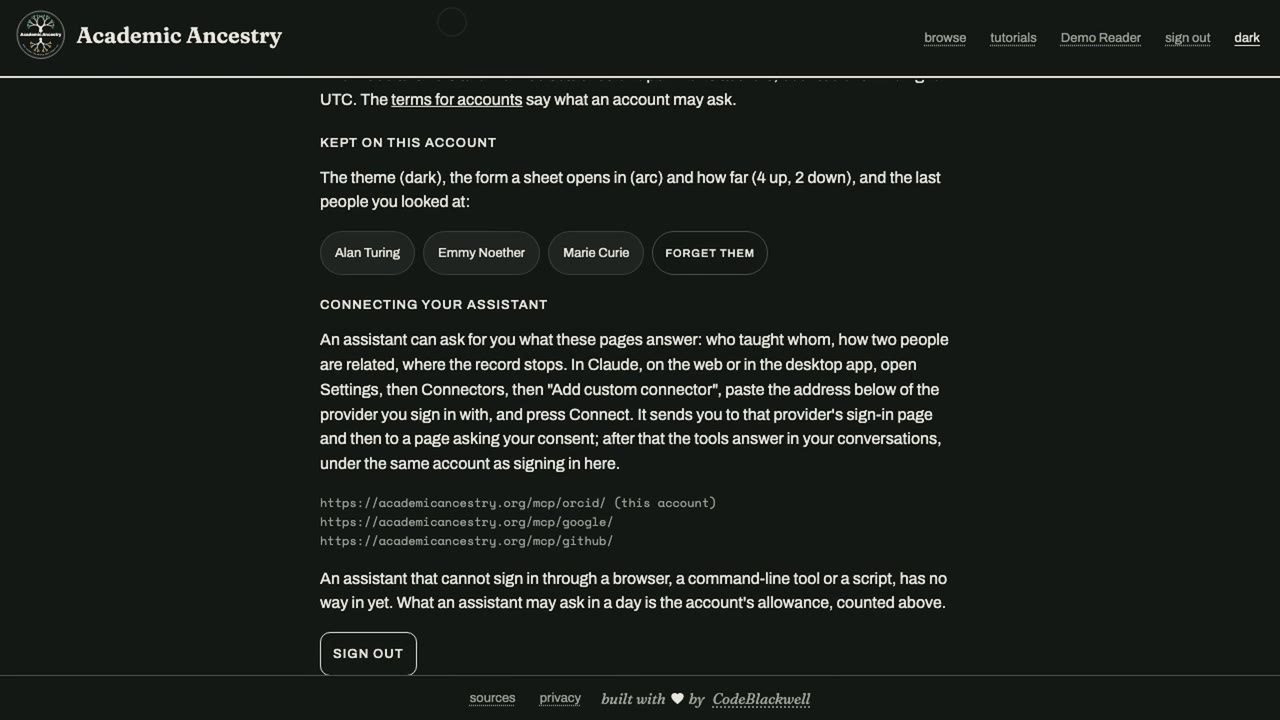
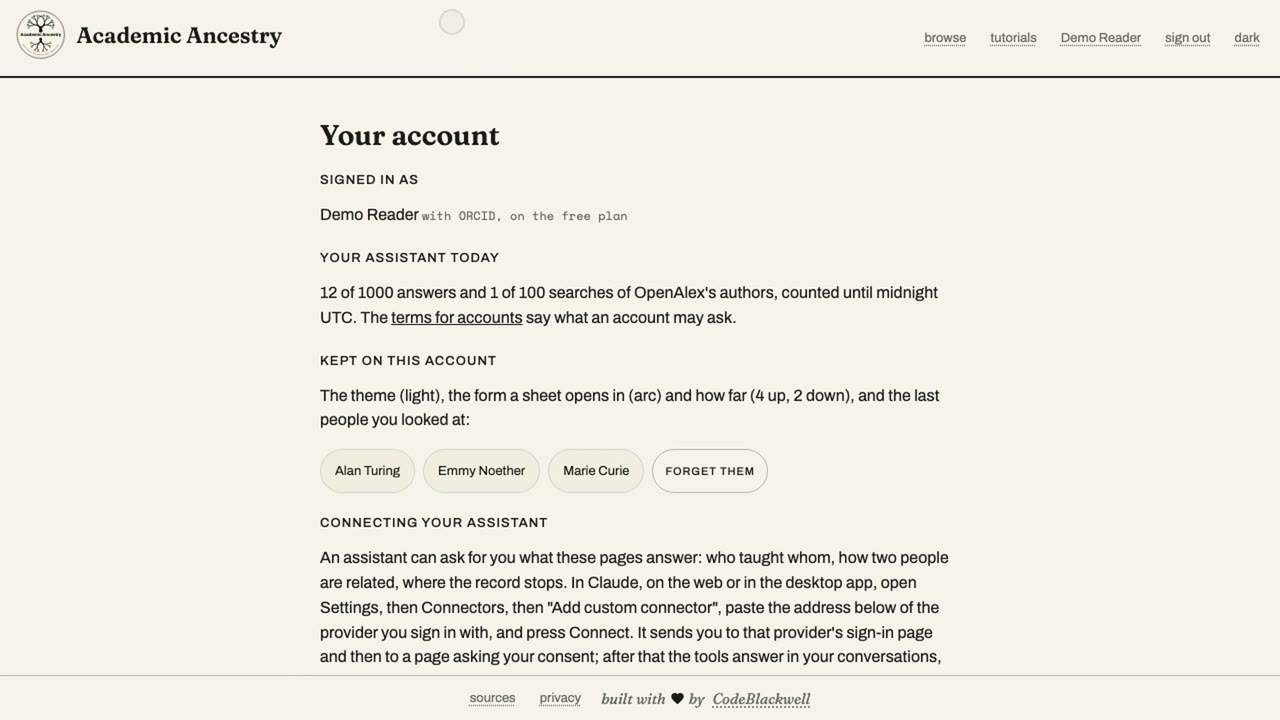 0:54Sign in and your accountWhere to sign in, with ORCID, Google or GitHub, and what your account page keeps for you.
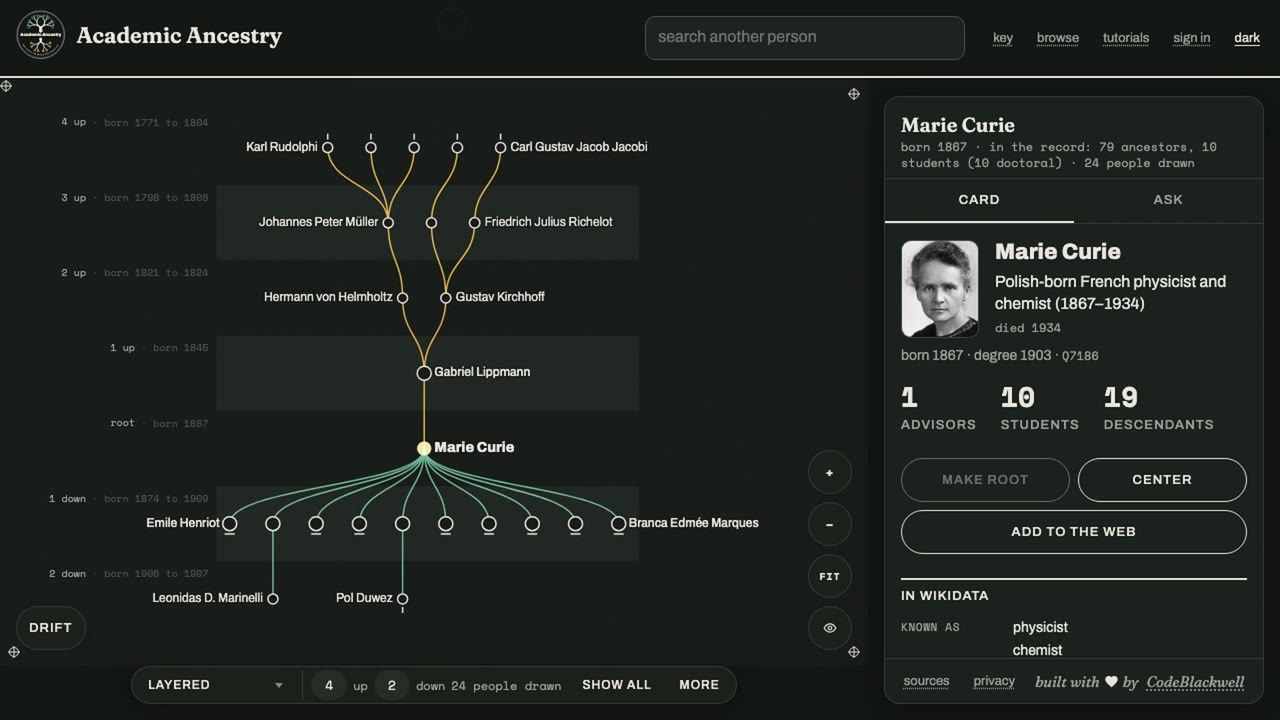 0:34Light and darkTurn the site dark with one button, and it stays that way until you turn it back.
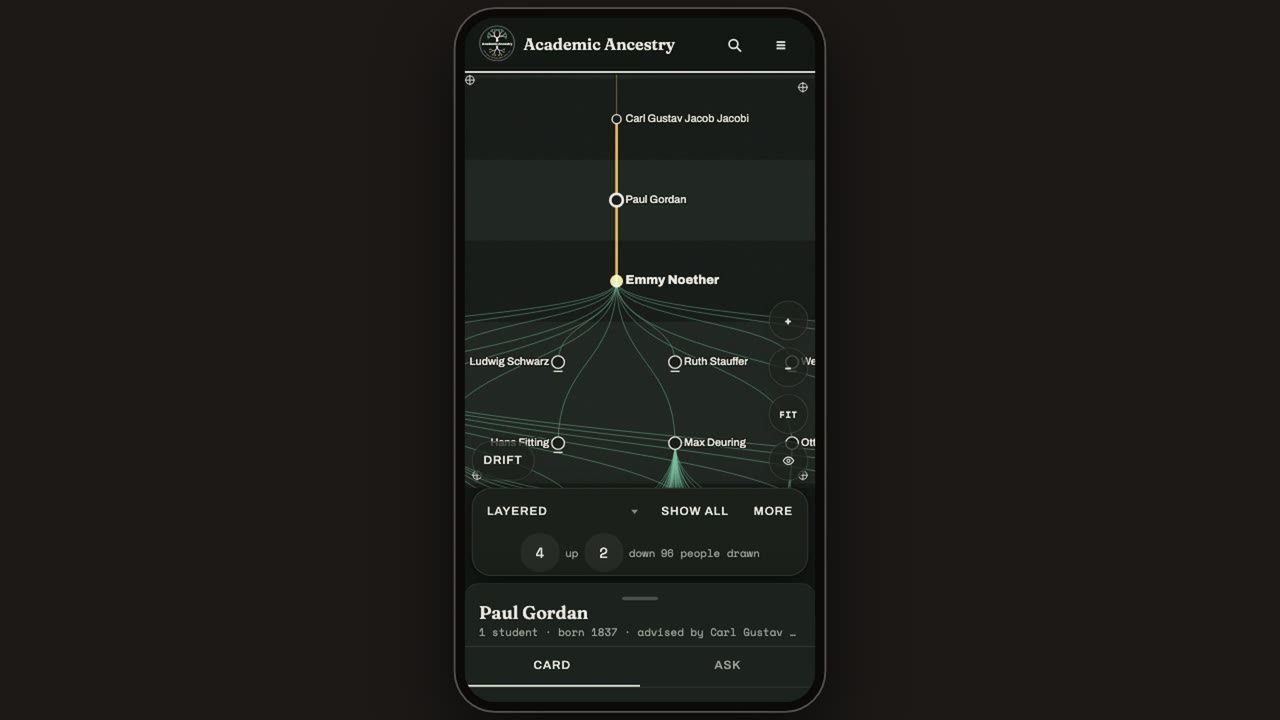 0:36On a phoneThe same sheet on a small screen: moving around, opening a card, and where the controls sit.
Your assistant
The record
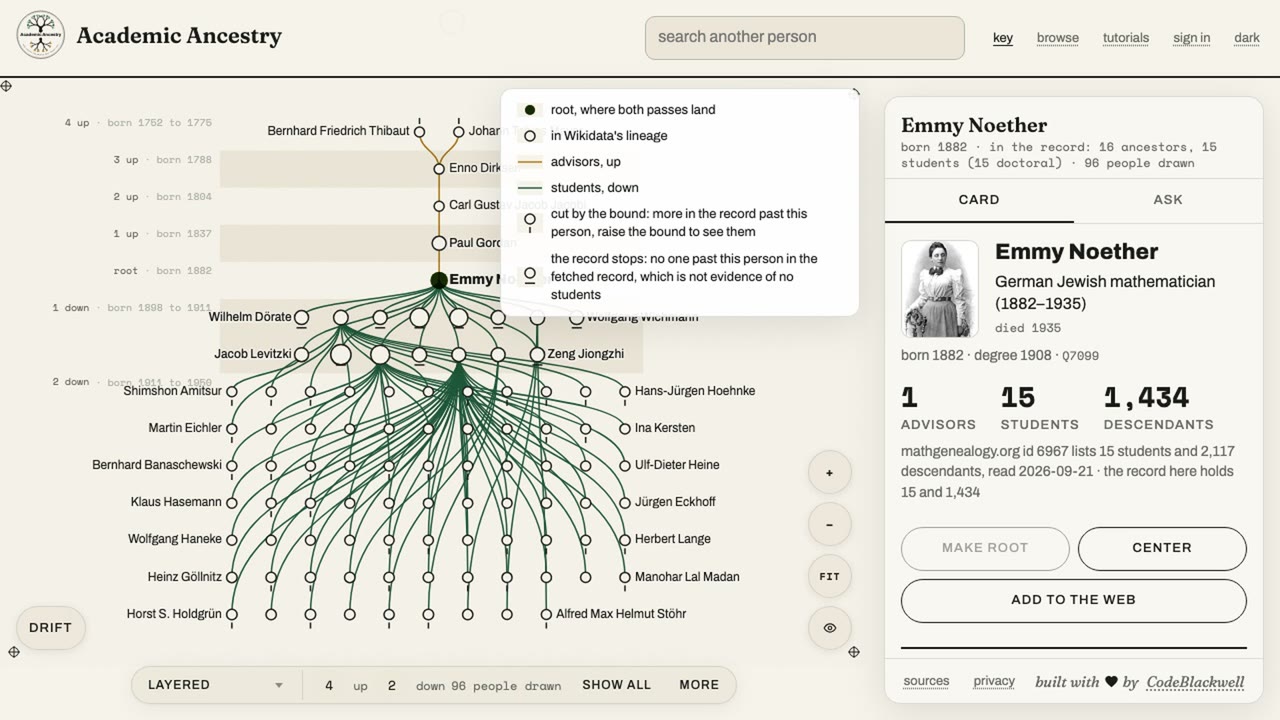 0:54Where the record stopsWhy a branch ends: a tick means there are more generations to draw, a bar means the record itself stops there.
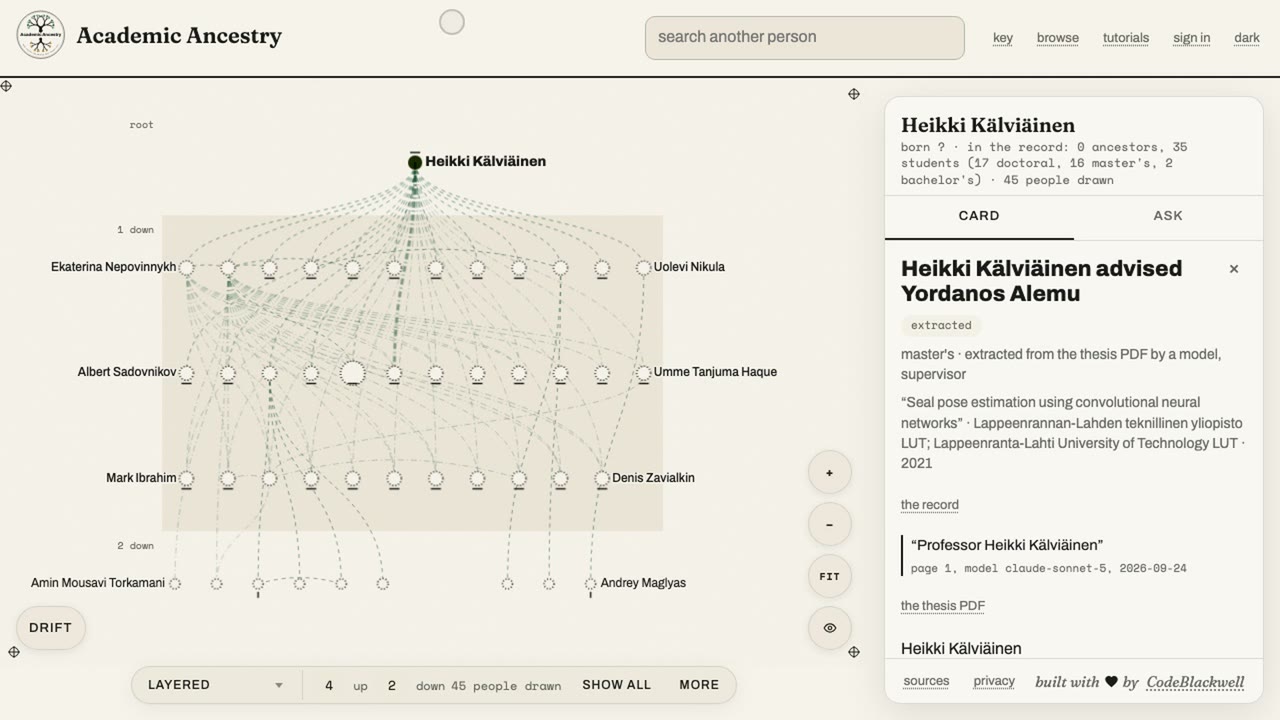 1:06Beyond WikidataPeople and lines read from university repositories, and the three kinds of evidence a line can rest on.
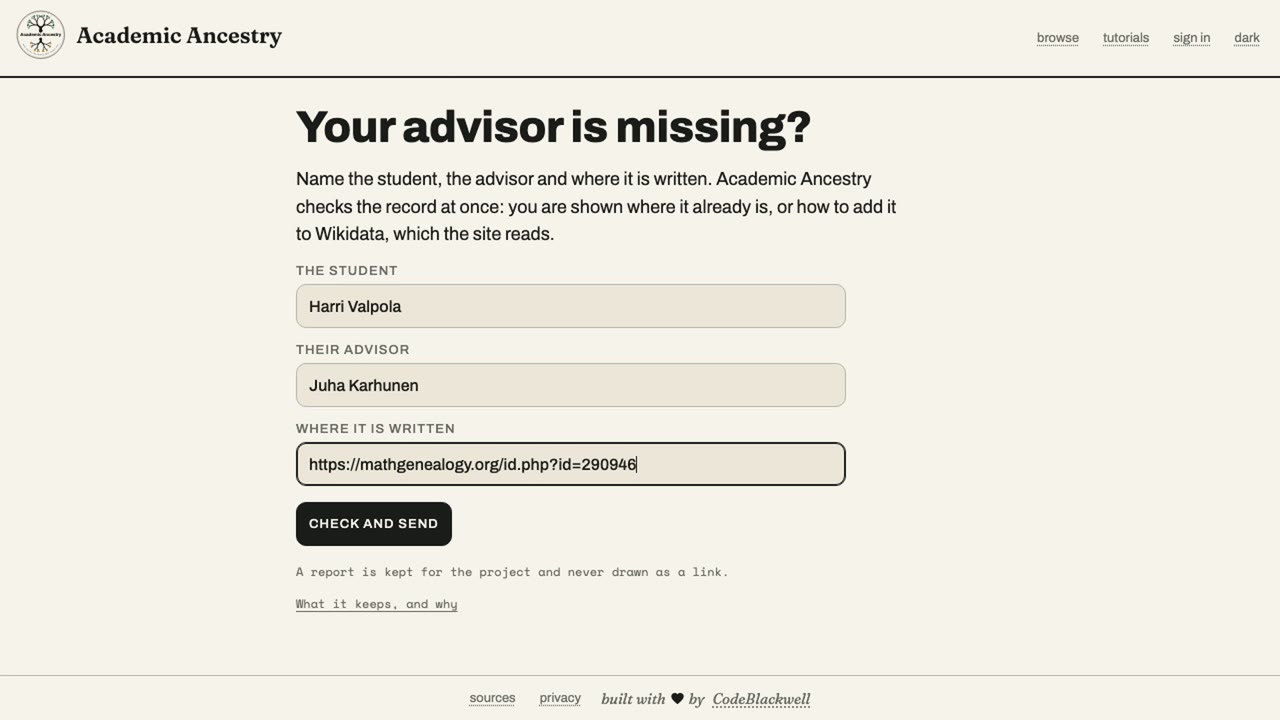 0:44Report a missing advisorFrom a person's card to the form: name the advisor, say where it is written, and what the record does with it.